

Having a Pet in the Peace Corps
Adopting a community pet is a popular choice of many Peace Corps Volunteers. They’re cuddly, cute, and keep you company. But what to do when Peace Corps Service is over? Learn how to bring your Peace Corps Pet home in this article!
It is very common to adopt a pet while serving as a Peace Corps Volunteer. It can be stressful living and working in a foreign country for such an extended period of time. The comforting hum of a cat’s purr or the happy greeting of a dog can do wonders for your anxiety levels and can often add an incredible amount to your Peace Corps Service.
That being said, our parents were on to something when they told us that pets are a lot of responsibility.
First things first, pets care is not the same in every country. Animals around the world are commonly seen as utilitarian. A dog is an inexpensive security system and a cat keeps mice and spiders away from the house.
Before you commit to a pet, have a conversation with your counter-part and trusted community members. Identify potential risks for your pet and find someone that will watch over it while you are out of site.
Second, seriously consider what you will do with your pet once your service is up. Animals quickly become dependent on their guardians and may not fair so well if thrown back into a culture that does not value its companionship qualities.
Many Peace Corps Volunteers opt to leave their pet with the volunteer that follows-them-up in their site while others decide to take their fur-children home to the United States.
In this article, we’ll layout the process and provide references that will help you get your Peace Corps Pet back home safely.
At a glance:
Review the updated process per the CDC
Verify what health certificates are required for your pet and region
Review your State requirements
Get in touch with your Airline
Equipment needs
Average cost
Best advice
Center for Disease Control and Prevention
The CDC regulates the importation of many different types of animals. As long as you’re not trying to import a horse, fish, or small rodent, this CDC webpage is going to be your first step.
The website is surprisingly intuitive. Select what animal you are bringing into the United States and read the updated requirements.
Bringing a cat seems fairly simple. There isn’t a federal requirement to provide a health certificate, but the cat will be inspected by the port authority.
Dogs are a bit more work, but are unquestionably worth the effort.
Take special note of the Rabies Vaccine requirement by country, so that you are not caught off guard when you arrive in the U.S.
United States Department of Agriculture
The USDA mirrors much of what is found on the CDC website but offers a path to additional requirements placed by your home State.
Simply select the animal you are brining into the United States from the given list. Take note of any updated certificates that need to be accounted for based on the animal and geographic regions.
Next, scroll down a bit and select your home state. You will be re-directed to a requirements page outlining that State’s guidelines.
Airline Policies
Each Airline will have their own policy and price tag for flying your pet home. A lot of times these policies are dependent on the size of the pet, given the amount of cargo space that is needed. Below is a list of the major airlines policy pages.
Equipment
Pet carriers are required to be big enough to allow room for your pet to stand up without needing to duck or crouch. They also need to be able to turn around completely while inside the crate.
It is recommended that you measure the height and length of your pet, and find a carrier that matches these measurements while leaving some wiggle room.
Depending on the duration of the flight home, some airlines require that you also include a food and water bowl to be stored inside the crate. This is generally used during unforeseen flight delays or long layovers.
Below are industry standard items that you can use as a reference when looking for reliable equipment in your host country.


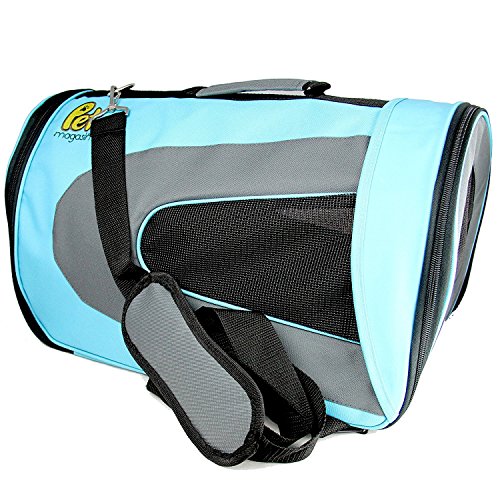
Cost
Seeing as each pet and flight will be different, it’s tough to give an exact number. If you’re bringing home a smaller pet, you could be looking at only a few hundred dollars.
A large dog could run you nearly $1,000.
Your readjustment allowance should help you with this cost, but it is important to budget ahead of time.
Best advice
Reach out to current and former Volunteers that are serving or have served in your host country; chances are others have committed to flying their companions home as well. Volunteers who have gone through the process will be a great resource for you.
Congratulations on making it through this article and preparing yourself for your Peace Corps experience. You can find more information about Preparing for the Peace Corps, Peace Corps Discounts, and Concerned Parents in our other articles.
Remember you can support this website by clicking the ‘support' button and purchasing all of the items you'll need for the upcoming experience through any Amazon Affiliate link. Anything you buy, we get a small % from Amazon. It really helps us keep the site updated and running.
Hope to hear from you!
Like. Comment. Share.

How to entertain yourself during your Peace Corps Service
As we prepare for the Peace Corps, we so often focus only on the projects we hope to lead and fail to recognize how much downtime we will actually have. Brace yourself…you will have a lot of downtime. Learn how to fill it with the useful tips in this article!
Downtime…
Those precious moments in between community projects where you have no gardens to build, no families with which to have lunch, no sex-ed seminars to lead, and no class to teach.
As we prepare for the Peace Corps, we so often focus only on the projects we hope to lead and fail to recognize how much downtime we will actually have.
There is something you should know…you will have a lot of downtime.
The classic move with handling downtime is to grab a good book or put on your favorite show. Assuming that most Peace Corps Volunteers don’t maintain a Netflix subscription (as if there was enough internet to justify it) and are not lugging around a suitcase of hardcover books - we’ve created a short cheatsheet to help you prepare beforehand.
*A quick disclaimer* - We here at Pathway to Peace Corps are utterly indifferent to the means in which you acquire your media content. While we share tips on how to obtain books and movies with and without purchasing them, we do not condone nor judge what you ultimately do.
No judgements over here. And with that…let’s get started.
A good book:
Local and City Libraries deserve a crisp high-five for their efforts in staying relevant in the digital age. With nothing more than a library card and the Libby App by Overdrive, you can locate your city library and download e-books at your leisure. Whether you like to read on your phone or a Kindle, you can choose to stockpile on books before you come or strategically siphon internet here and there to update your bookshelf during your Peace Corps service.
Another wonderful (but perhaps controversial) option is z-library.

Honestly, we have no idea how to explain this. All we know is that the website boasts having just shy of 5 million books available for free download and that it actually works. You have the option to download as an ePub or to send a version to your Kindle. The website is simple and clean. There are no aggravating popups that you have to fight off, and if you’re looking for a way to contribute to the site, they have a place for donations.
Movies, Music, TV, oh my:
There are two popular avenues to take when shipping off for your Peace Corps service. One option is to pack your external hard drive with as many movies and shows that you possibly can. The second option is to bring an empty external hard drive with you and simply copy all of the movies and shows that the option one people brought with them.
Both sound choices. Choose your own adventure.
If you choose to go with option one, find yourself a nice BitTorrent application (uTorrent is a popular choice) and download away. Websites like Reddit and Quora can help you find active and reputable peer-to-peer platforms.
If you are new to the P2P world and don’t know how to get started, this video is helpful.
Final Thoughts:
It is almost a guarantee that someone in your PCT group will have a loaded external hard-drive and be happy to share their files. So to this end, try not to worry too much about hoarding media content before you depart.
Don’t forget, with the inescapable downtime that you will experience during your 27 months as a Peace Corps Volunteer, you can always do more constructive activities that will help you grow as a person. We’ll offer some tips on that in a future article!
Congratulations on making it through this article and preparing yourself for your Peace Corps experience. You can find more information about Preparing for the Peace Corps, Peace Corps Discounts and Concerned Parents in our other articles.
Remember you can support this website by considering the Monthly Deals, or clicking the ‘support' button and purchasing all of the items you'll need for the upcoming experience through any Amazon Affiliate link. Anything you buy, we get a small % from Amazon. It really helps us keep the site updated and running.
Hope to hear from you!
Like. Comment. Share.